24/7 Control
◆ Advanced · D/s Dynamics ◆
24/7 Control
24/7 Control describes a continuous power exchange dynamic where authority and submission extend beyond scheduled scenes into everyday life. This advanced D/s structure requires extensive negotiation, trust, and practical frameworks to sustain.
What 24/7 Control means
24/7 Control represents a lifestyle approach to BDSM where the dominant partner maintains authority over the submissive partner continuously, rather than only during designated scenes. This dynamic encompasses decision-making across daily routines, communication patterns, household protocols, and intimate choices. The structure of 24/7 Control varies significantly between partnerships, ranging from subtle influence over specific life areas to comprehensive authority across multiple domains. Unlike scene-based play, this arrangement integrates power exchange into the fabric of ordinary existence.
The foundation of 24/7 Control rests on explicit consent frameworks that both partners negotiate before implementation. These agreements typically outline which areas fall under dominant authority, which remain autonomous, and how decisions get made in various contexts. Many practitioners establish protocols for daily check-ins, regular renegotiation sessions, and clear communication channels. The continuous nature of 24/7 Control distinguishes it from part-time D/s dynamics, though intensity levels differ widely based on individual preferences and practical constraints.
Successful 24/7 Control requires partners to balance power exchange with real-world responsibilities, relationship health, and individual wellbeing. Most practitioners develop systems that accommodate work obligations, social contexts, and personal boundaries while maintaining the underlying authority structure. This dynamic often evolves gradually as partners build trust and refine their protocols. The sustained nature of 24/7 Control demands ongoing attention to consent, communication, and mutual satisfaction rather than static rule enforcement.
How 24/7 Control is practiced
Implementing 24/7 Control begins with comprehensive negotiation about expectations, boundaries, and practical logistics. Partners typically start with limited authority areas before expanding the dynamic, allowing both parties to assess compatibility and adjust protocols. Sustainable 24/7 Control incorporates regular review processes and flexibility mechanisms.
- Protocol establishment: Partners create detailed agreements covering decision-making authority, daily rituals, communication requirements, and areas of autonomy that preserve individual agency.
- Gradual implementation: Most practitioners begin with specific domains like scheduling or household tasks before extending 24/7 Control to additional life areas.
- Communication structures: Regular check-ins, journaling systems, and designated discussion times help maintain alignment and address concerns before they escalate into problems.
- Flexibility mechanisms: Successful 24/7 Control includes protocols for pausing the dynamic during emergencies, illness, or high-stress periods without dissolving the relationship.
- External context management: Partners develop strategies for navigating professional settings, family gatherings, and public spaces while maintaining their private power exchange dynamic.
The practice of 24/7 Control adapts continuously as partners learn what works for their specific relationship. Dominant partners balance authority with responsibility for their submissive's wellbeing, while submissive partners maintain agency through negotiated consent frameworks.
Safety and consent considerations
The continuous nature of 24/7 Control creates unique safety considerations that differ from scene-based BDSM. Partners must establish clear protocols for withdrawing consent, addressing concerns, and pausing the dynamic when necessary. Regular renegotiation sessions allow both parties to assess whether the arrangement continues serving their needs. Many practitioners schedule monthly or quarterly reviews to discuss what works, what needs adjustment, and whether the scope of 24/7 Control should expand or contract. Safewords remain relevant even in lifestyle dynamics, providing emergency mechanisms for halting specific activities or requesting immediate discussion.
Sustainable 24/7 Control requires both partners to maintain individual support networks, personal interests, and autonomous decision-making in agreed-upon areas. Dominant partners carry responsibility for monitoring their submissive's physical and emotional wellbeing, recognizing signs of burnout, and adjusting protocols accordingly. Submissive partners need skills for articulating needs, setting boundaries, and distinguishing between productive challenge and harmful overreach. The power imbalance inherent in 24/7 Control demands heightened attention to consent quality, ensuring that submission remains freely given rather than coerced through isolation or manipulation.
Further reading
◆ Go deeper
Female Led Relationship FLR – Path to the Collar
Explore the foundations of sustained power exchange dynamics, including negotiation frameworks, protocol development, and maintaining healthy authority structures in long-term D/s relationships.
Frequently asked questions
How does 24/7 Control differ from scene-based BDSM?
24/7 Control extends power exchange into everyday life rather than limiting authority to scheduled play sessions. The dynamic remains active during mundane activities like grocery shopping, work decisions, and daily routines, requiring different negotiation and consent frameworks than scene-based kink.
Can 24/7 Control work with careers and family obligations?
Yes, most practitioners adapt 24/7 Control to accommodate professional responsibilities and external relationships. Partners typically negotiate which contexts allow visible power exchange and which require discretion, maintaining the underlying dynamic while adjusting outward presentation based on setting.
What happens if someone needs to pause 24/7 Control temporarily?
Healthy 24/7 Control dynamics include protocols for temporary suspension during illness, family emergencies, or high-stress periods. Partners should negotiate these pause mechanisms during initial setup, establishing how to communicate the need for temporary autonomy without ending the relationship.
How do partners prevent burnout in continuous power exchange?
Preventing burnout requires regular check-ins, maintaining individual interests outside the dynamic, and building flexibility into protocols. Both dominant and submissive partners need personal time, external support networks, and permission to adjust the intensity of 24/7 Control based on current capacity.
Ready to turn understanding into practice?
Our self-paced course BDSM Fundamentals: Introduction to BDSM Practices takes you from curiosity to confident, safe practice — with lifetime access.
Enrol Now · €99
You may also like

Fiesta BDSM en Málaga: NTV El Oxígeno x Temple of Chains (nov. 2026)
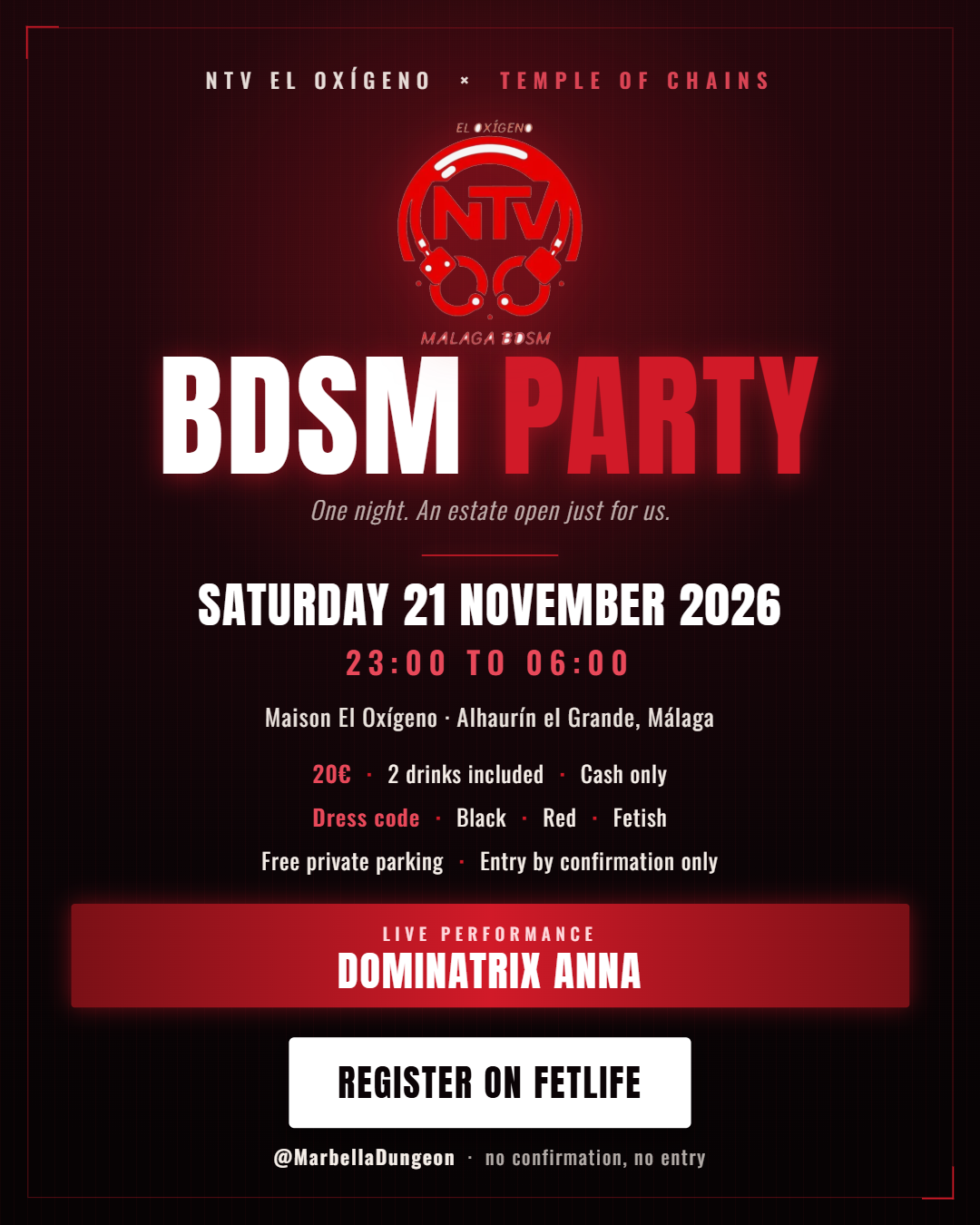
BDSM Party in Málaga: NTV El Oxígeno x Temple of Chains (Nov 2026)