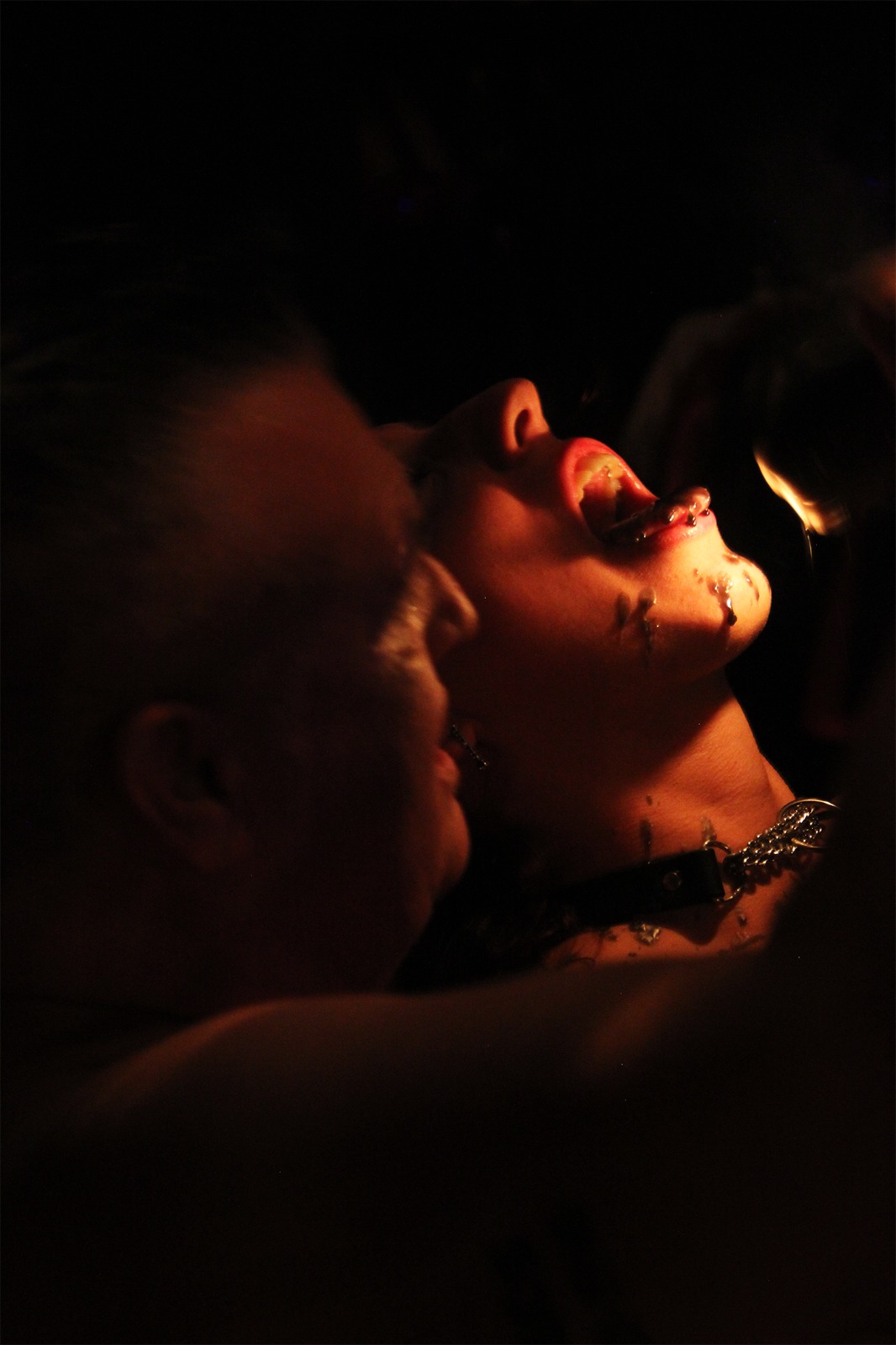
Hook Suspension
◆ Advanced · Edge Play ◆
Hook Suspension
Hook suspension is an advanced BDSM practice where surgical hooks are temporarily inserted through the skin to support partial or full body weight during a suspension scene.
What hook suspension means
Hook suspension represents one of the most physically and psychologically intense forms of edge play within BDSM and kink communities. This practice involves the temporary insertion of sterile surgical hooks through specific points on the body, typically the back, chest, or legs. The hooks are then attached to rigging equipment that allows the bottom to be lifted partially or fully off the ground. The experience combines elements of needle play, body modification, and power exchange within a carefully controlled scene.
The practice originated outside mainstream BDSM culture but has found a home among practitioners seeking profound experiences of sensation, endurance, and transcendence. Hook suspension creates intense physical sensations that many participants describe as transformative. The endorphin release triggered by the piercing and tension can produce altered states of consciousness similar to subspace. For many, the practice serves as a ritual of trust, vulnerability, and personal challenge within their dynamic.
Within the broader context of sensation play and edge play, hook suspension occupies a unique position. Unlike other forms of impact or sensation work, this practice requires extensive anatomical knowledge, sterile technique, and emergency preparedness. The risks are substantial, making it essential that only experienced practitioners with proper training facilitate hook suspension scenes. The practice demands absolute consent, thorough negotiation, and unwavering attention to safety protocols throughout the entire experience.
How hook suspension is practiced
Hook suspension requires meticulous preparation, specialized equipment, and comprehensive safety protocols. Practitioners must understand anatomy, sterile technique, rigging mechanics, and emergency response. The process unfolds in distinct phases, each requiring careful attention and continuous communication between all participants in the scene.
- Pre-scene preparation: Medical assessment, hydration, nutrition planning, mental preparation, and detailed negotiation of limits, safewords, and emergency protocols before any equipment is assembled.
- Sterile hook insertion: Using surgical-grade hooks and sterile technique, hooks are inserted through pinched skin at predetermined anatomical points, typically avoiding areas near major blood vessels or nerves.
- Rigging and weight testing: Hooks are attached to suspension rigging with gradual weight transfer, allowing tissue to adjust and enabling the bottom to communicate comfort levels throughout.
- Suspension phase: The bottom is lifted partially or fully, with constant monitoring of circulation, skin integrity, consciousness, and emotional state during the entire suspension period.
- Aftercare and recovery: Careful lowering, hook removal, wound care, emotional support, monitoring for delayed reactions, and extended aftercare addressing both physical and psychological needs.
Hook suspension scenes typically last between fifteen minutes and two hours, depending on the bottom's experience, physical condition, and the intensity of the suspension. Extended aftercare is non-negotiable, often continuing for days following the scene.
Safety and consent considerations
Hook suspension carries significant risks including infection, nerve damage, excessive bleeding, fainting, shock, and psychological trauma if practiced without proper knowledge and preparation. Only practitioners with extensive training in anatomy, sterile technique, and emergency response should facilitate hook suspension scenes. All equipment must be medical-grade and properly sterilized. Participants should have current bloodborne pathogen training and access to emergency medical supplies. The practice is contraindicated for individuals with certain medical conditions, including bleeding disorders, diabetes, immune system compromise, or heart conditions.
Informed consent for hook suspension must be extraordinarily detailed, covering specific risks, emergency protocols, and realistic expectations about pain, duration, and recovery. Negotiations should address physical limits, psychological boundaries, documentation preferences, and support needs. Safewords must be clearly established, with backup non-verbal signals in case the bottom becomes non-verbal during the scene. A spotter should always be present, and the top must be prepared to terminate the scene immediately if any concerning signs appear. Post-scene wound care instructions and follow-up check-ins are essential components of consent.
Further reading
◆ Go deeper
The Balance of Sensation: Mastering Pain and Pleasure
Develop sophisticated understanding of sensation work, pain processing, and the psychological dimensions of intense physical experiences. Build foundational knowledge essential for exploring advanced practices safely and consensually.
Frequently asked questions
How is hook suspension different from other suspension practices?
Hook suspension uses temporary piercings through skin to support body weight, unlike rope or fabric suspension that distributes weight through external harnesses. This creates unique sensations and requires specialized anatomical knowledge, sterile technique, and wound care protocols not necessary for other suspension forms.
What qualifications should someone have before facilitating hook suspension?
Facilitators should have extensive training in anatomy, sterile technique, bloodborne pathogen protocols, suspension rigging, and emergency medical response. Many practitioners apprentice with experienced suspension artists for years before working independently. Medical background or professional piercing experience provides valuable foundational knowledge.
Can hook suspension cause permanent damage?
When practiced correctly with proper technique and sterile protocols, hook suspension typically heals completely within weeks. However, improper technique can cause scarring, nerve damage, infection, or tissue trauma. Risks increase significantly without adequate training, preparation, or adherence to safety protocols throughout the scene.
How long does recovery take after a hook suspension scene?
Physical healing typically requires two to four weeks, with insertion sites forming scabs and gradually closing. Psychological integration may take longer, particularly after intense or transformative experiences. Participants should plan for reduced physical activity, careful wound care, and emotional processing time following any hook suspension scene.
Ready to turn understanding into practice?
Our self-paced course BDSM Fundamentals: Introduction to BDSM Practices takes you from curiosity to confident, safe practice — with lifetime access.
Enrol Now · €99
You may also like

Fiesta BDSM en Málaga: NTV El Oxígeno x Temple of Chains (nov. 2026)
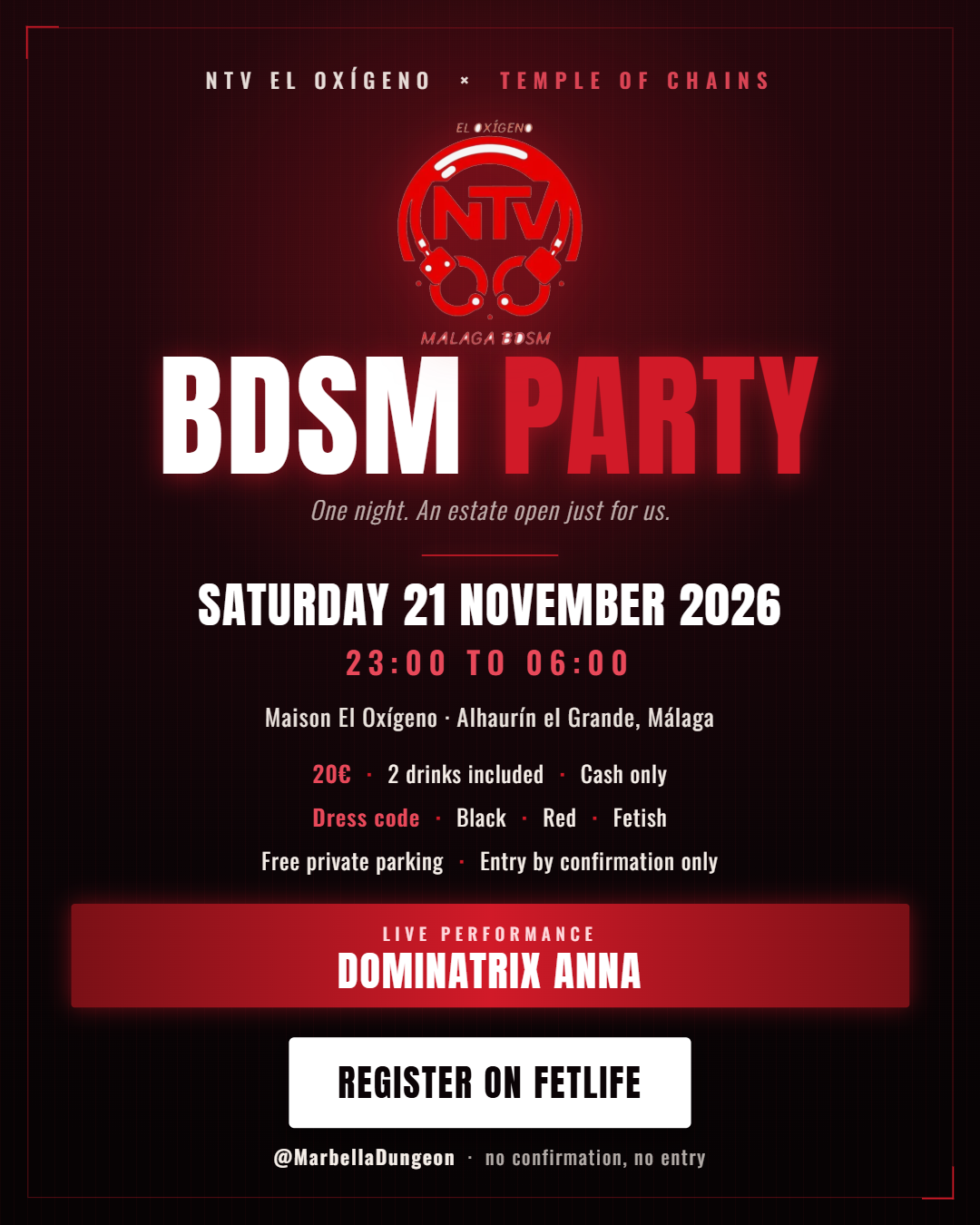
BDSM Party in Málaga: NTV El Oxígeno x Temple of Chains (Nov 2026)