OTK Spanking
◆ Beginner · Impact Play ◆
OTK Spanking
OTK spanking positions the submissive across the dominant's lap for hand or implement strikes to the buttocks. This intimate arrangement creates physical closeness while establishing clear power dynamics in BDSM scenes.
What OTK spanking means
OTK spanking refers to over-the-knee positioning where the bottom lies face-down across the top's lap during impact play. This configuration allows the dominant to control the submissive's body while delivering strikes with hand, paddle, or other implements. The position originated in domestic discipline contexts but has become a foundational practice in modern kink and BDSM dynamics. OTK spanking emphasises intimacy through physical contact, with the submissive's torso supported by the dominant's thighs.
The arrangement creates natural vulnerability as the bottom's balance depends entirely on the top's support. OTK spanking differs from bent-over or standing positions by maximising skin-to-skin contact throughout the scene. Many practitioners value this positioning for its psychological impact alongside the physical sensation. The dominant maintains control through body positioning rather than restraints, though some scenes incorporate bondage elements. This classic setup works equally well for punishment scenarios, funishment play, or sensation exploration.
Within power exchange dynamics, OTK spanking reinforces hierarchical relationships through literal positioning. The submissive's lowered posture and dependence on the dominant's lap creates clear role distinction. This practice appears across various BDSM contexts from strict discipline protocols to playful bedroom scenes. OTK spanking serves as an accessible entry point for those new to impact play, requiring minimal equipment while offering substantial psychological and physical engagement. The position naturally limits strike intensity compared to standing arrangements, making it suitable for beginners.
How OTK spanking is practiced
Successful OTK spanking requires attention to positioning, comfort, and communication throughout the scene. The dominant typically sits on a sturdy chair, sofa, or bed edge with feet flat on the floor. The submissive then drapes across the lap, with weight distributed between the dominant's thighs and their own hands or knees touching the floor. Proper setup ensures both partners can maintain position comfortably.
- Positioning: Place the submissive's hips over the dominant's thigh for optimal striking angle, keeping the bottom elevated and accessible throughout.
- Hand placement: The dominant's non-striking hand can rest on the lower back for control or hold the submissive's wrists for restraint.
- Warm-up: Begin OTK spanking with lighter hand strikes, gradually building intensity as the tissue warms and endorphins increase tolerance.
- Target areas: Focus strikes on the fleshy part of the buttocks, avoiding the tailbone, lower back, and backs of thighs initially.
- Implements: Progress from hand spanking to paddles, hairbrushes, or other tools once both partners feel comfortable with basic OTK spanking technique.
Throughout the scene, check in verbally or through agreed signals to ensure the submissive remains comfortable in position. Adjust body placement as needed to prevent cramping or circulation issues. OTK spanking sessions typically last between five and twenty minutes, depending on intensity and negotiated limits.
Safety and consent considerations
Negotiate all aspects of OTK spanking before beginning, including intensity levels, implements, duration, and acceptable target areas. Establish safewords and non-verbal signals since the submissive's face may be turned away from the dominant. Discuss any physical limitations such as back problems, joint issues, or circulation concerns that might affect positioning. The dominant should monitor the submissive's breathing and colour throughout the scene, particularly if the torso is compressed.
Avoid striking the lower back, tailbone, kidneys, or backs of knees during OTK spanking to prevent injury. Watch for skin breaking, excessive bruising beyond negotiated limits, or signs of distress. Keep water nearby and plan for aftercare immediately following the scene. The submissive may experience dizziness when standing after extended time in the OTK position, so support them as they rise. Both partners should understand that consent can be withdrawn at any point during play.
Further reading
◆ Go deeper
The Balance of Sensation: Mastering Pain and Pleasure
Develop your understanding of impact play dynamics, sensation management, and the psychological aspects that make OTK spanking and other practices deeply satisfying for both partners. Learn to read responses, adjust intensity, and create memorable scenes.
Frequently asked questions
What makes OTK spanking different from other spanking positions?
OTK spanking creates maximum physical contact between partners, with the submissive fully supported on the dominant's lap. This intimate positioning emphasises the power dynamic while allowing the top to feel the bottom's reactions directly through body contact. The arrangement naturally limits strike force compared to bent-over positions, making it ideal for beginners.
Can larger or heavier submissives do OTK spanking comfortably?
Yes, with proper positioning adjustments. The dominant may need a firmer seat or to position the submissive with more weight supported by their own hands and knees on the floor. Some practitioners use a bed edge where the submissive's upper body rests on the mattress. Communication about comfort ensures successful OTK spanking regardless of body size.
How long should an OTK spanking scene last?
Most OTK spanking sessions run between five and twenty minutes, though this varies based on intensity, experience level, and negotiated goals. Beginners should start with shorter durations to avoid position fatigue. The dominant should regularly check that the submissive can maintain the position comfortably and adjust or end the scene if circulation or joint issues arise.
What should I do if my legs go numb during OTK spanking?
Signal immediately using your safeword or agreed non-verbal cue. Numbness indicates circulation restriction that requires immediate position change. The dominant should help you up slowly and allow blood flow to return gradually. Future scenes may need positioning adjustments, such as placing a pillow under your hips or shortening session duration to prevent recurrence.
Ready to turn understanding into practice?
Our self-paced course BDSM Fundamentals: Introduction to BDSM Practices takes you from curiosity to confident, safe practice — with lifetime access.
Enrol Now · €99
You may also like

Fiesta BDSM en Málaga: NTV El Oxígeno x Temple of Chains (nov. 2026)
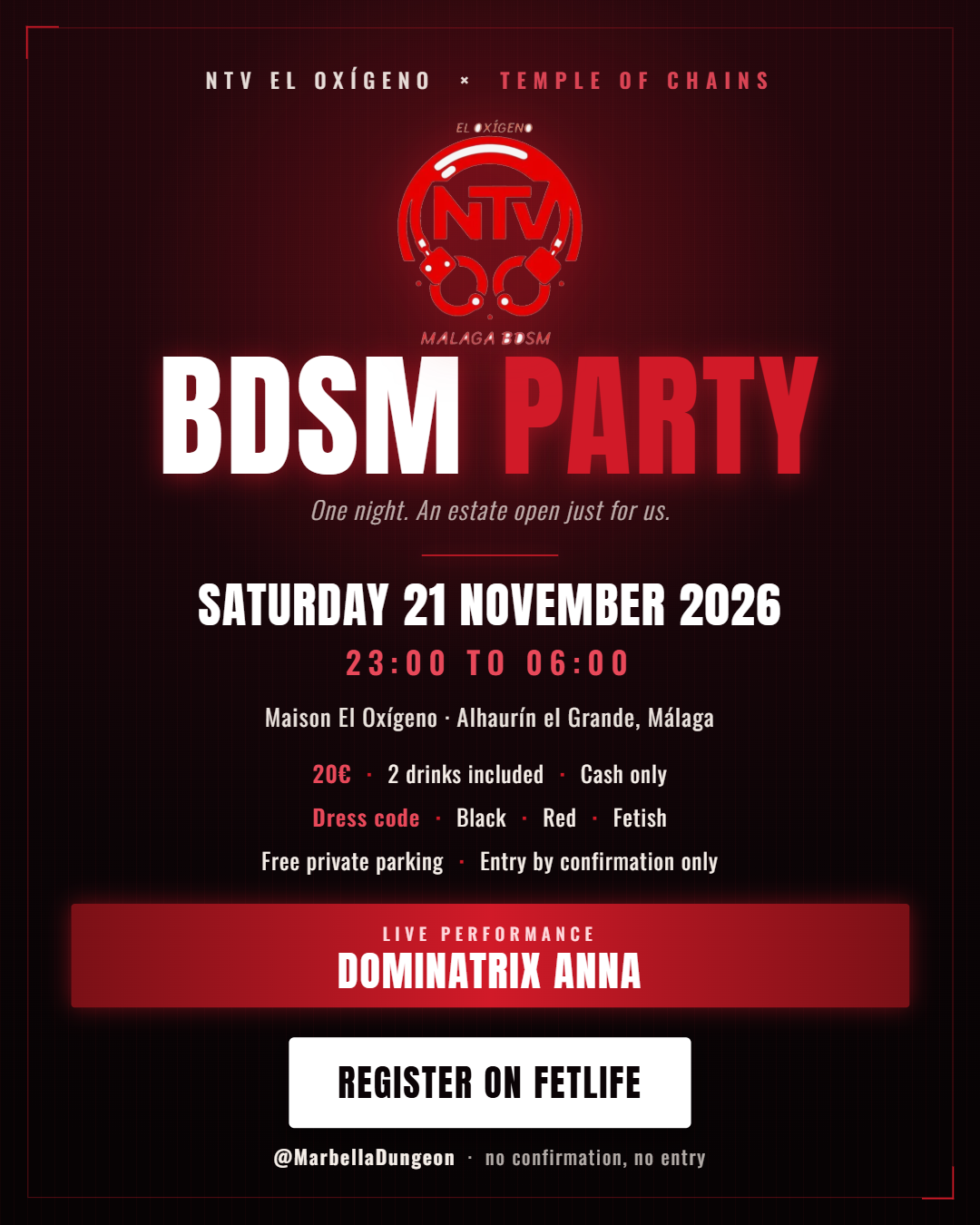
BDSM Party in Málaga: NTV El Oxígeno x Temple of Chains (Nov 2026)