Slave Contract
◆ Safety · Documentation ◆
Slave Contract
A slave contract is a written document that outlines the terms, expectations, and boundaries within a Master/slave or dominant/submissive dynamic. While not legally binding, a slave contract serves as a powerful tool for negotiation and mutual understanding in consensual power exchange.
What a slave contract means
A slave contract is a negotiated agreement between partners in a BDSM dynamic that articulates the structure of their power exchange relationship. This document typically includes protocols, service expectations, limits, and the scope of authority granted to the dominant partner. A slave contract functions as both a symbolic commitment and a practical reference point for ongoing consent within the dynamic.
The slave contract differs from casual scene negotiation by addressing long-term arrangements rather than single encounters. Many practitioners use a slave contract to formalize 24/7 dynamics, total power exchange relationships, or Master/slave protocols. The process of creating a slave contract often proves as valuable as the document itself, requiring thorough communication about desires, boundaries, and relationship vision.
Despite the terminology, a slave contract establishes consensual parameters rather than actual legal slavery. The submissive partner retains full autonomy and can renegotiate or terminate the agreement at any time. A slave contract represents a framework for consensual submission, not an enforceable legal instrument, and should always prioritize the wellbeing of all participants in the dynamic.
How a slave contract is practiced
Creating and implementing a slave contract requires careful negotiation, honest communication, and ongoing review. Partners typically develop their slave contract through collaborative discussion, ensuring both parties understand and consent to all terms before formalizing the agreement.
- Initial negotiation: Partners discuss desires, limits, protocols, and relationship structure before drafting any slave contract language or formal terms.
- Documenting terms: The slave contract includes specific protocols, service expectations, safewords, hard limits, and the scope of power exchange authority.
- Review periods: Effective slave contract agreements include scheduled reviews to assess what works, address concerns, and modify terms as needed.
- Symbolic elements: Some practitioners incorporate ceremony or ritual when signing their slave contract to mark the commitment within their dynamic.
- Living document approach: The most functional slave contract evolves with the relationship, allowing amendments as partners grow and dynamics shift over time.
A slave contract works best when both partners view it as a communication tool rather than rigid law. Regular check-ins ensure the agreement continues serving the relationship rather than constraining it.
Safety and consent considerations
A slave contract must never override ongoing consent or create genuinely binding obligations. The submissive partner always retains the right to withdraw consent, renegotiate terms, or end the dynamic entirely. Any slave contract that attempts to remove these fundamental rights contradicts the principles of safe, sane, and consensual kink practice. Partners should include explicit language about safewords, hard limits, and termination procedures within every slave contract.
Creating a slave contract requires both partners to negotiate from a position of clear communication and emotional stability. Rushing into a slave contract during the intensity of new relationship energy can lead to agreements that don't reflect genuine compatibility or sustainable expectations. Taking time to develop the slave contract gradually allows for thoughtful consideration of what each partner truly wants from the power exchange dynamic.
Further reading
◆ Go deeper
Kink and BDSM Sex Life – Relationship Success
Build sustainable power exchange relationships with clear communication frameworks. Learn to structure agreements, negotiate boundaries, and create dynamics that honor both partners' needs while maintaining safety and consent.
Frequently asked questions
Is a slave contract legally binding?
No, a slave contract holds no legal weight and cannot be enforced in court. These documents serve as symbolic agreements and communication tools within consensual BDSM dynamics, but they do not create legal obligations or override fundamental rights to withdraw consent.
How long should a slave contract be?
A slave contract can range from a single page to extensive documents spanning many pages. The ideal length depends on the complexity of your dynamic and how much detail serves your relationship. Focus on clarity and completeness rather than arbitrary length requirements.
Can I modify a slave contract after signing?
Absolutely. A healthy slave contract includes provisions for regular review and modification. As your dynamic evolves, your agreement should adapt to reflect new understandings, changing limits, and developing aspects of your power exchange relationship. Schedule periodic reviews to assess needed changes.
What should be included in a slave contract?
Essential elements include protocols, service expectations, limits (both hard and soft), safewords, health considerations, duration or review periods, and termination procedures. Many slave contract documents also address specific activities, daily routines, and the scope of authority granted within the dynamic.
Ready to turn understanding into practice?
Our self-paced course BDSM Fundamentals: Introduction to BDSM Practices takes you from curiosity to confident, safe practice — with lifetime access.
Enrol Now · €99
You may also like
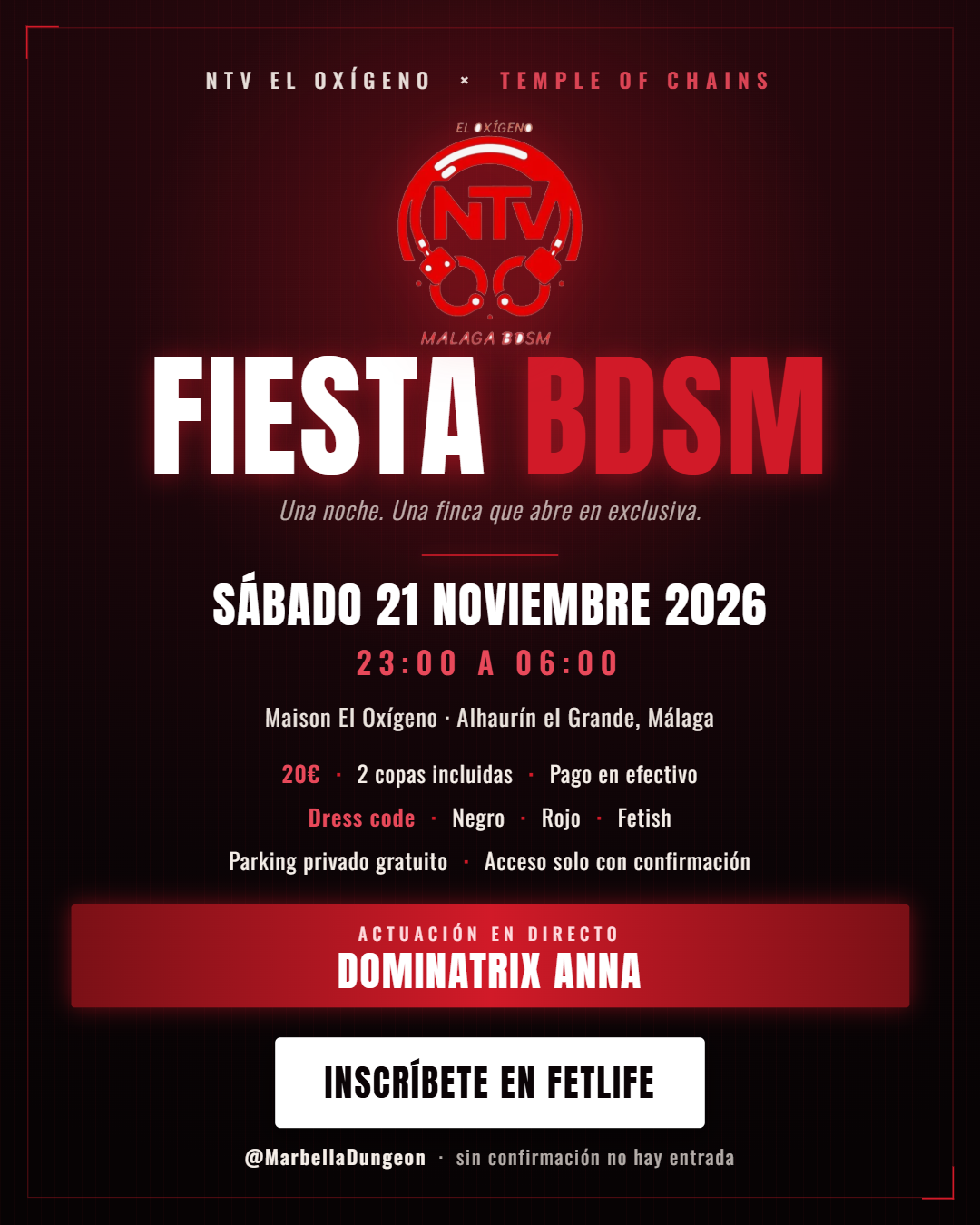
Fiesta BDSM en Málaga: NTV El Oxígeno x Temple of Chains (nov. 2026)
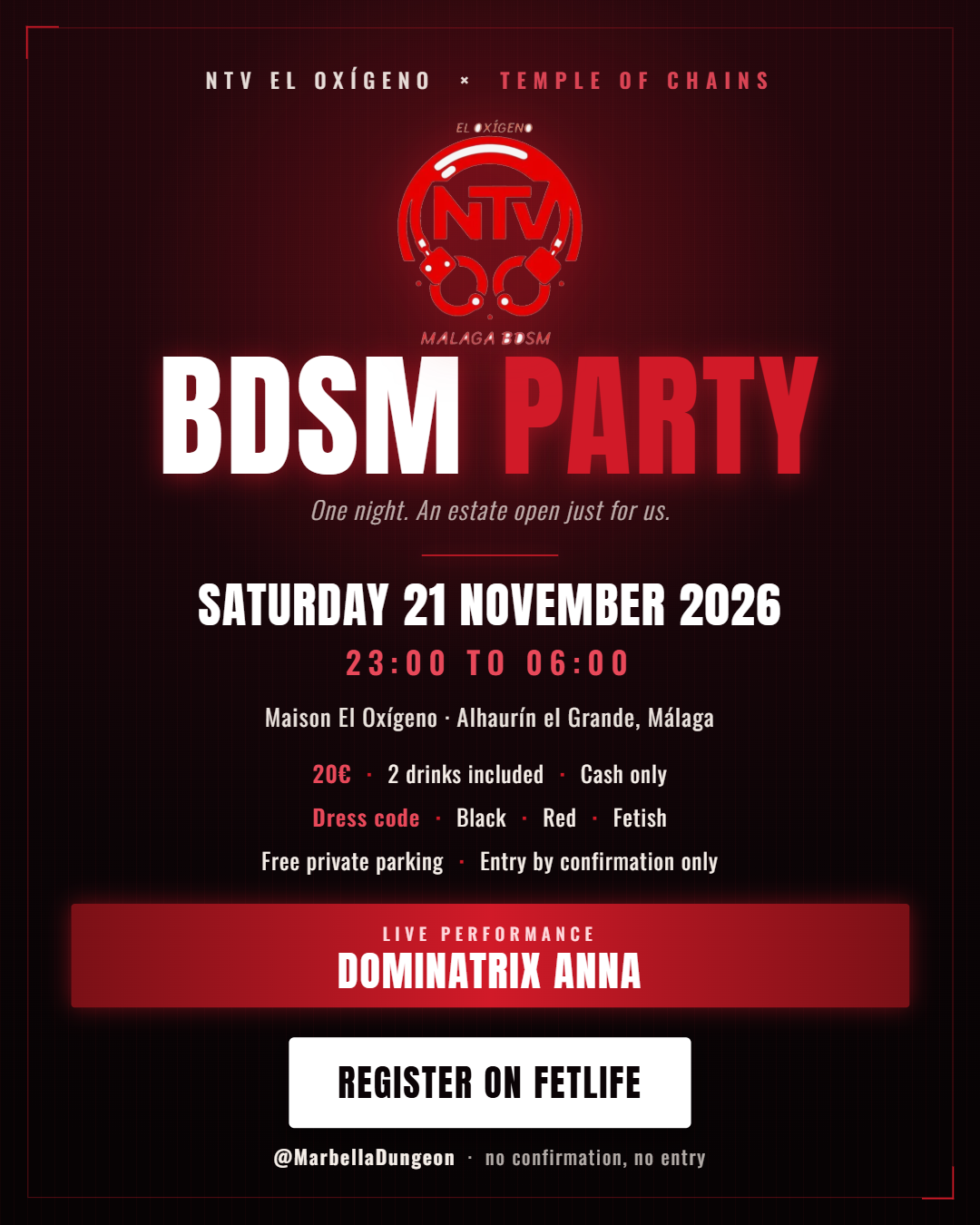
BDSM Party in Málaga: NTV El Oxígeno x Temple of Chains (Nov 2026)