Funishment
◆ Intermediate · Power Exchange ◆
Funishment
Funishment describes a playful form of punishment in BDSM where the consequence is enjoyable rather than corrective. Unlike traditional discipline, funishment serves as entertainment and connection rather than genuine behaviour modification.
What funishment means
Funishment occupies a unique space in power exchange dynamics where punishment becomes pleasurable play. The term combines fun and punishment, describing scenes where a dominant applies consequences that both partners enjoy. This differs from genuine punishment, which aims to correct unwanted behaviour. Funishment serves as entertainment, bonding, and sensation play wrapped in the framework of discipline. Many BDSM practitioners use funishment to explore power dynamics without the emotional weight of actual correction.
The concept of funishment acknowledges that some submissives actively enjoy activities their dominant might use as punishment. When a bottom loves spanking, receiving spanking as punishment loses its corrective function. Funishment embraces this paradox by making the enjoyment explicit. Partners negotiate scenes where misbehaviour becomes an invitation to play rather than a genuine infraction. This creates space for theatrical bratting, playful defiance, and consensual rule-breaking that everyone understands as performance.
Within kink communities, funishment represents an honest approach to power exchange. Rather than pretending certain activities are unwanted, partners acknowledge mutual enjoyment whilst maintaining the structure of dominant and submissive roles. This transparency strengthens consent and communication. Funishment scenes often include exaggerated reactions, theatrical scolding, and knowing glances that signal the playful nature of the interaction. The power dynamic remains intact even as both partners derive pleasure from the exchange.
How funishment is practiced
Funishment requires clear negotiation to distinguish it from genuine discipline. Partners discuss which activities fall into the funishment category and establish separate protocols for actual correction. This clarity prevents confusion and maintains the integrity of both playful and serious consequences within the dynamic.
- Negotiated misbehaviour: Partners identify which rule violations trigger funishment versus genuine punishment, creating clear boundaries for playful defiance.
- Enjoyable consequences: Dominants select activities the submissive finds pleasurable, such as spanking, bondage, or sensation play framed as discipline.
- Theatrical elements: Scenes often include exaggerated scolding, bratty responses, and performative resistance that signal the playful nature of the interaction.
- Timing and context: Funishment typically occurs during dedicated play sessions rather than in response to genuine disappointment or relationship issues.
- Aftercare rituals: Partners engage in aftercare that acknowledges the playful nature whilst still addressing any physical or emotional needs from the scene.
Successful funishment maintains the structure of power exchange whilst celebrating mutual enjoyment. Partners often develop specific signals or language that distinguishes funishment from serious discipline, ensuring both understand the nature of each interaction.
Safety and consent considerations
Clear communication prevents funishment from undermining genuine discipline within a dynamic. Partners must establish separate protocols for playful and serious consequences, ensuring the submissive understands which category applies in each situation. Without this clarity, funishment can erode the effectiveness of actual behaviour modification and create confusion about expectations. Regular check-ins help partners assess whether the balance between funishment and genuine punishment serves the dynamic effectively.
Physical safety considerations for funishment mirror those of any BDSM scene involving impact, restraint, or sensation play. Partners negotiate limits, establish safewords, and monitor physical responses throughout the scene. The playful framing does not reduce the need for proper technique, warm-up, or awareness of vulnerable areas. Dominants must remain attentive to the submissive's wellbeing even when both partners enjoy the activity, as pleasure does not eliminate the possibility of injury or emotional overwhelm.
Further reading
◆ Go deeper
The Balance of Sensation: Mastering Pain and Pleasure
Explore how to blend pleasure and intensity in BDSM scenes. This course covers techniques for creating experiences where sensation serves connection, whether through funishment or other forms of consensual play that honour both partners' desires.
Frequently asked questions
How does funishment differ from regular punishment in BDSM?
Funishment is enjoyable for both partners and serves as play rather than correction, whilst regular punishment aims to modify behaviour and may involve consequences the submissive genuinely dislikes. Funishment celebrates mutual pleasure within the power exchange framework, whereas traditional discipline addresses actual infractions or disappointments within the dynamic.
Can funishment undermine discipline in a D/s relationship?
Funishment can undermine discipline if partners fail to distinguish between playful and serious consequences. Clear protocols that separate funishment from genuine punishment preserve the effectiveness of both. Regular communication ensures the submissive understands which type of consequence applies in each situation, maintaining the integrity of the power exchange dynamic.
What activities work well for funishment scenes?
Activities the submissive enjoys make effective funishment, including spanking, bondage, sensation play, or service tasks the bottom finds pleasurable. The key is selecting consequences both partners want to experience whilst maintaining the theatrical framework of discipline. Partners negotiate specific activities during scene planning to ensure mutual satisfaction.
How do partners signal that a consequence is funishment rather than serious?
Partners establish explicit signals such as specific language, timing, or context that indicates funishment. Some use particular phrases, schedule funishment during play sessions rather than daily life, or employ exaggerated theatrical elements that signal the playful nature. Clear negotiation before scenes prevents confusion about the type of consequence being applied.
Ready to turn understanding into practice?
Our self-paced course BDSM Fundamentals: Introduction to BDSM Practices takes you from curiosity to confident, safe practice — with lifetime access.
Enrol Now · €99
You may also like

Fiesta BDSM en Málaga: NTV El Oxígeno x Temple of Chains (nov. 2026)
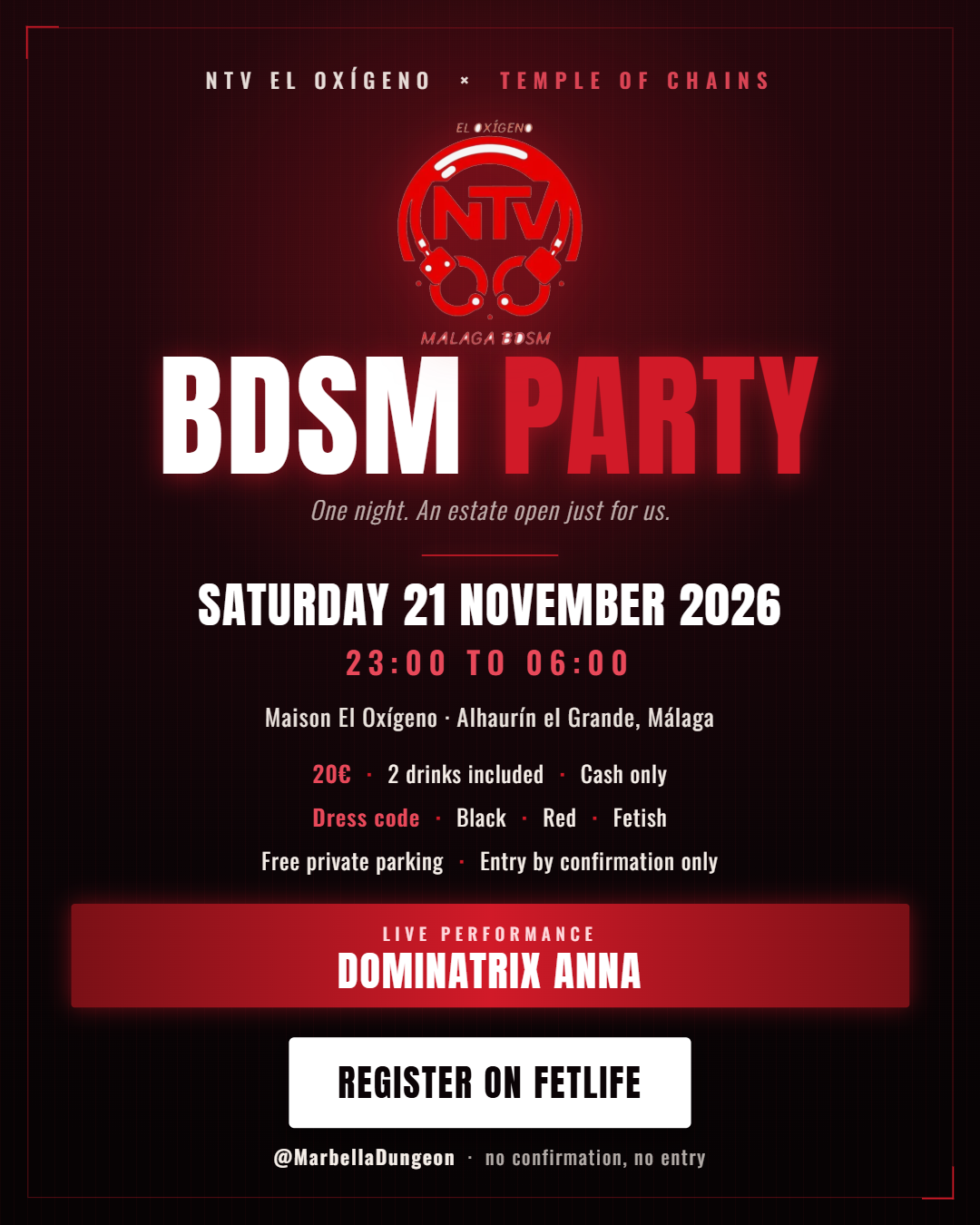
BDSM Party in Málaga: NTV El Oxígeno x Temple of Chains (Nov 2026)