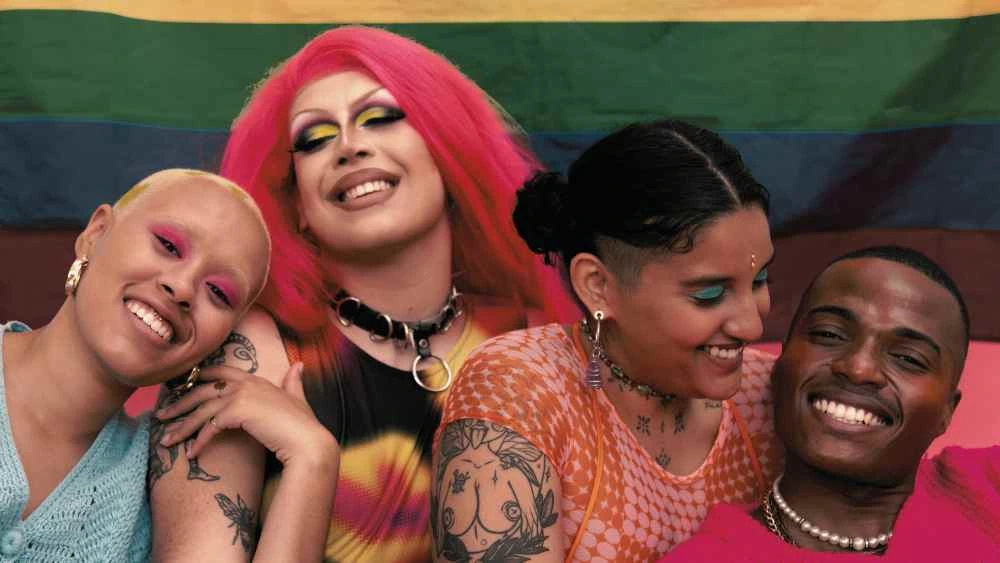
Authentic Identity
Authentic Identity – Finding Who You Are Behind the Masks
What authentic identity really means, how society teaches us to wear masks over our true selves, and how reconnecting with who you genuinely are transforms every area of your life
The search for authentic identity is one of the most fundamental journeys a person can undertake. Authentic identity is not the person you present to the world in order to be accepted, not the role you have learned to perform in relationships or in society, and not the collection of expectations you have absorbed from family, culture and religion about who you are supposed to be. Authentic identity is the self that exists beneath all of that – the core of who you actually are when no one is watching, when the performance is not required and when you allow yourself, perhaps for the first time, to be genuinely honest about what you feel, what you desire and what actually gives your life meaning.
This guide explores authentic identity in depth – what it means, how we lose contact with it, the specific masks that society and relationships ask us to wear over it and how the path of self-discovery leads back to the genuine self that was always there. This article is part of our Identity & Self-Discovery pillar. Read alongside our guides on breaking societal conditioning and embracing desires without shame.
What It Is
What is Authentic Identity?
Authentic identity is the self that is genuinely yours – not assembled from external expectations but discovered through honest self-inquiry into what you actually feel, value, desire and believe when the social filters are removed. It is the person your body recognises as true – the orientation toward life that produces a sense of aliveness and rightness rather than the dull friction of performing a self that does not quite fit.
Authentic identity has several dimensions that work together. There is the soul dimension – the deepest sense of who you are at the level of core values and fundamental orientation, the thing that does not change regardless of circumstance. There is the emotional dimension – the genuine feelings, desires and needs that make up your actual inner life rather than the managed presentation of it. And there is the embodied dimension – the way authentic identity lives in the body as a felt sense of aliveness, rightness and genuine presence rather than the chronic low-grade tension of suppression and performance.
Authentic identity is not something you create or decide. It is something you uncover – by removing, layer by layer, everything that was never really you.
The Masks
The Masks Society Asks Us to Wear
Society does not ask for authentic identity. It asks for conformity – for behaviour, expression and presentation that fits within acceptable ranges and does not disturb the social order. From the earliest age, we learn which parts of ourselves are welcome and which must be hidden, which desires are permissible and which must be suppressed, which feelings are acceptable and which make others uncomfortable and therefore must be managed.
The masks we learn to wear in response are not usually chosen consciously. They develop gradually, shaped by the specific requirements of the environments we grow up in – family systems with their particular rules about emotion and expression, school cultures with their social hierarchies and conformity pressures, religious traditions with their frameworks of acceptable selfhood, professional environments with their requirements for specific forms of presentation and suppression of anything that does not fit the role.
The Good Person Mask
One of the most universal masks worn over authentic identity is the performance of goodness – the presentation of a self that is always kind, never selfish, consistently generous and without darker desires or less flattering impulses. This mask is particularly damaging to authentic identity because it requires the suppression of the full range of human experience – including the shadow dimensions of desire, anger, ambition and need that are entirely normal but socially discouraged.
The Competent Professional Mask
The professional world demands a specific version of the self – confident, rational, always in control, never uncertain or vulnerable – that has little relationship to authentic identity. Many people spend more waking hours wearing this mask than in any other context, which means the professional self can gradually displace authentic identity if the space outside work never provides genuine permission to be different.
The Relationship Mask
Intimate relationships, which should be spaces of authentic identity, often require their own forms of masking – presenting the self in ways calculated to be attractive, withholding aspects of genuine desire or need for fear of rejection, performing emotional states that seem more appropriate than the ones actually present. When the relationship mask becomes habitual, people find themselves genuinely unknown by the people closest to them – which is one of the most painful forms of loneliness available.
The Sexuality Mask
Perhaps the most heavily enforced masking occurs around sexuality and desire. Society’s narrow definitions of acceptable sexual expression have required enormous numbers of people to hide fundamental aspects of their authentic identity – their sexual orientation, their gender identity, their kink interests, their specific desires – behind a mask of normative sexuality that has nothing to do with who they genuinely are. The cost of this masking to authentic identity and to wellbeing is immense and well-documented.
How We Lose It
How We Lose Our Authentic Identity
Authentic identity is not typically lost in a single dramatic moment. It erodes gradually, through countless small acts of self-suppression, self-editing and self-betrayal that accumulate over years until the distance between who we actually are and who we present ourselves to be becomes so habitual that we can no longer easily locate the difference.
The process begins in childhood, when the natural expressiveness and self-disclosure of early life encounters the first social requirements to be different. A child who discovers that certain feelings make caregivers uncomfortable learns to suppress those feelings. A child who discovers that certain desires meet with shame learns to hide those desires – first from others, then increasingly from themselves. These early adaptations are intelligent survival responses. But they become the first layers of distance from authentic identity that compound across a lifetime.
By adulthood, many people have lived so long inside a constructed self that authentic identity feels unavailable or even dangerous to pursue. The familiar self – however constraining – feels safer than the genuine self, whose desires and dimensions remain unknown and therefore frightening. This is why the return to authentic identity is a journey of courage as much as of discovery. It requires willingness to encounter dimensions of yourself that the masks have kept hidden, often for very good reasons at the time they were developed.
Heart, Brain and Soul
Heart, Brain and Soul – The Triad of Authentic Identity
Authentic identity is not located in any single dimension of the self. It lives at the intersection of three distinct but interconnected systems – the heart, the brain and what might be called the soul – and genuine authenticity requires these three to be in communication and alignment with each other rather than working in isolation or in conflict.
The Brain – The Narrator
The brain constructs the stories we tell ourselves about who we are. Its extraordinary capacity for narrative, analysis and pattern recognition is genuinely useful for navigating complexity and for building the self-understanding that authentic identity requires. But the brain alone is not a reliable guide to authentic identity – it is too easily shaped by social conditioning, too prone to confusing the constructed self for the real one and too capable of generating sophisticated rationalisations for why the masks we wear are actually who we are.
The Heart – The Compass
The heart – understood not as a metaphor but as a genuine intelligence centre – functions as the compass of authentic identity. The Institute of HeartMath’s research on heart intelligence has established that the heart has its own neural network, its own electromagnetic field and its own form of information processing that operates independently from and in dialogue with the brain. The heart signals authenticity through a felt sense of rightness, aliveness and genuine resonance that the brain alone cannot generate. When you are living in authentic identity, the heart registers it. When you are performing a self that is not genuinely yours, the heart registers that too – as a subtle but persistent sense of wrongness, flatness or disconnection.
The Soul – The Core
At the deepest level, authentic identity has a dimension that transcends the particular circumstances, relationships and cultural contexts of a person’s life – a core orientation, a fundamental way of being in the world, a set of values and an essential aliveness that is simply and irreducibly who you are. This soul dimension of authentic identity does not change when circumstances change. It is the still point at the centre that remains consistent even when everything on the surface shifts. Reconnecting with this dimension is both the deepest goal and the most profound gift of authentic identity work.
Heart-Brain Coherence
Heart-Brain Coherence and Authentic Living
Heart-brain coherence is the state in which the heart and brain are working together in aligned, harmonious communication rather than in conflict or disconnection. Research by the HeartMath Institute has found that coherent states – in which heart rhythms become smooth and regular, and heart-brain communication becomes synchronised – are associated with significantly better cognitive function, emotional regulation, physical health outcomes and the felt sense of clarity and groundedness that people describe as feeling genuinely themselves.
Heart-brain coherence is the physiological signature of authentic identity. When you are acting in alignment with your genuine values, genuine desires and genuine self-understanding, the heart and brain tend to move into coherence naturally. When you are performing a self that is not genuinely yours, maintaining a mask that has no connection to your authentic identity, or suppressing genuine desires and feelings to meet external expectations, the heart-brain relationship tends toward incoherence – a state that registers as stress, flatness, anxiety or a diffuse sense that something is fundamentally wrong.
Practices that support heart-brain coherence – including deliberate coherence breathing (slow, even breathing focused at the heart centre), mindfulness, time in genuine connection and the gradual reduction of masks and self-suppression – are therefore also practices that support authentic identity. The path toward authentic living and the path toward heart-brain coherence are, in fundamental ways, the same path.
Place one hand on your heart. Breathe slowly and evenly – five seconds in, five seconds out – focusing your attention at the heart centre. As you breathe, try to generate a genuine feeling of care, appreciation or warmth for something or someone in your life. Even 90 seconds of this practice can shift the heart-brain relationship toward coherence and can open a brief window of access to authentic identity beneath the day’s accumulated masking and performance.
Reclaiming It
Reclaiming Your Authentic Identity
Begin With Honest Self-Inquiry
Reclaiming authentic identity begins with the willingness to ask genuinely honest questions about yourself and to sit with the answers rather than rushing to comfortable conclusions. What do you actually desire, separate from what you have been taught to desire? What do you actually value, apart from the values your environment impressed on you? What parts of yourself have you hidden for so long that you can barely remember they exist? What would you do, be and express if the social cost were removed entirely?
Notice the Mask-Wearing Moments
Begin paying attention to the moments when you adjust yourself for an audience – when you edit what you say, perform an emotion you do not actually feel, suppress a genuine response or present a version of yourself calculated to be acceptable rather than true. These moments are not evidence of weakness. They are evidence of intelligence and social learning. But noticing them creates the awareness that is the prerequisite for choosing differently.
Listen to the Body
The body is a reliable guide to authentic identity because it cannot be lied to in the way that the mind can. Chronic muscle tension, persistent fatigue, a sense of flatness or going through the motions, the specific relief that comes in certain contexts and with certain people – all of these are communications from the authentic self about the gap between who you are presenting and who you genuinely are. Learning to listen to the body is one of the most important practices for reconnecting with authentic identity.
Find Safe Contexts for Authentic Expression
Not every context is safe for authentic expression, and wisdom includes discernment about where and with whom authentic identity can be risked. But finding at least some contexts – a therapist’s office, a trusted friend, a community that shares your values, a kink or creative practice – where the full self can be present is essential for authentic identity to remain alive. Authentic identity needs air. Without it, it does not disappear but it goes further underground, and the cost of its absence grows.
Kink and Authenticity
Authentic Identity and Kink
For many people, the journey toward authentic identity runs directly through their kink desires. The sexual and relational self – particularly the aspects of it that deviate from social norms – is one of the dimensions most heavily masked by social conditioning. People who carry desires for BDSM, power exchange or non-normative forms of intimacy often experience these desires as among the most authentically theirs of anything in their inner life, and their suppression as among the most costly acts of self-betrayal they have made.
Acknowledging kink desires as part of authentic identity rather than as aberrations to be overcome is therefore a significant act of genuine self-reclamation. The specific courage required to claim this dimension of authentic identity – to say “this is genuinely part of who I am” rather than continuing to mask it behind social acceptability – is often transformative far beyond the specific desires themselves. People who reclaim their kink identity as part of authentic identity frequently describe a broader and more general sense of coming alive – as if the permission granted to this one hidden dimension allows the whole authentic self to breathe more freely.
FAQ
Frequently Asked Questions About Authentic Identity
Is authentic identity fixed or does it change over time?
The soul dimension of authentic identity – the core values, fundamental orientation and essential aliveness that define who you are at the deepest level – tends to be remarkably stable across a lifetime. The surface expressions of authentic identity – the specific forms your desires take, the relationships and communities through which your authentic self finds expression, the language and practices through which you understand yourself – do change and develop. This is not inconsistency. It is authentic identity becoming more fully expressed over time rather than more fully suppressed.
What if my authentic identity conflicts with the expectations of people I love?
This is one of the most genuinely difficult dimensions of authentic identity work. The fear that being genuinely known will cost us the love and acceptance of people who matter is one of the primary reasons authentic identity remains hidden. There is no universal answer, because the specific people and relationships involved determine what is possible. What is worth knowing is that relationships built entirely on a false or masked self are themselves a form of loneliness, however comfortable they may feel. The gradual movement toward authentic identity – at a pace that honours the relationships involved and the genuine risks they carry – is usually more sustainable and more loving than either continuing to mask indefinitely or making sudden, dramatic disclosures.
How does authentic identity connect to mental health?
The research on authenticity and psychological wellbeing is consistent and clear: living in greater alignment with authentic identity is associated with better mental health outcomes across multiple dimensions, including lower rates of anxiety and depression, higher self-esteem, better relationship quality and greater overall life satisfaction. The chronic stress of sustained self-suppression and masking has direct physiological and psychological costs. Moving toward authentic identity is not simply spiritually meaningful – it is genuinely good for your mental and physical health.
Further Reading
How to identify and release the specific social conditioning that distances you from authentic identity.
How to reclaim your desires as part of your authentic identity rather than hiding them.
How sexual self-acceptance connects to the broader journey of authentic identity.
Research on heart intelligence, heart-brain coherence and the physiology of authentic living.

You may also like

Healing Kink Shame
Rebuild Self-Worth