Functional Bondage
◆ Intermediate · Bondage ◆
Functional Bondage
Functional bondage prioritizes utility over aesthetics, using restraint to achieve specific scene objectives. Unlike decorative approaches, functional bondage focuses on positioning, access, and control within BDSM dynamics.
What functional bondage means
Functional bondage refers to restraint techniques designed primarily for practical purposes within a BDSM scene rather than visual appeal. This approach emphasizes utility, positioning the submissive or bottom in ways that serve the dominant's intentions. Functional bondage may facilitate access for impact play, maintain specific postures, or restrict movement to enhance power exchange dynamics. The restraint serves a clear purpose beyond decoration.
In kink contexts, functional bondage often appears simpler than elaborate rope work or decorative techniques. A submissive might be bound to furniture, positioned for specific activities, or restrained to limit resistance during consensual play. The focus remains on what the bondage accomplishes rather than how it appears. Functional bondage supports the scene's objectives, whether that involves sensation play, service protocols, or psychological dominance.
This form of restraint integrates seamlessly into broader BDSM dynamics. Functional bondage might hold a partner in place during flogging, restrict movement during sensory deprivation, or maintain positions during extended scenes. The restraint becomes a tool for control and consent negotiation, establishing clear physical boundaries that support the agreed-upon dynamic. Practitioners value functional bondage for its directness and effectiveness in power exchange scenarios.
How functional bondage is practiced
Functional bondage requires thoughtful planning around scene objectives and partner safety. Dominants consider what they want to achieve, then select restraint methods that support those goals. The approach emphasizes efficiency, security, and comfort sufficient for the scene's duration while maintaining the intended restrictions.
- Position-specific restraint: Binding limbs or torso to maintain specific postures that facilitate planned activities or enhance vulnerability within the dynamic.
- Access-oriented binding: Using restraint to expose or present particular body areas for sensation play, inspection, or other consensual scene elements.
- Movement restriction: Limiting the submissive's ability to move, resist, or adjust position, reinforcing the power exchange and control aspects of play.
- Furniture integration: Securing partners to beds, chairs, or specialized equipment to achieve stable positioning without complex rope work or elaborate techniques.
- Quick-release considerations: Implementing functional bondage with safety mechanisms that allow rapid removal if the submissive uses their safeword or experiences distress.
Functional bondage succeeds when restraint serves the scene without becoming the scene's focus. Experienced practitioners balance security with circulation safety, ensuring bindings remain effective throughout play while monitoring for numbness or discomfort that requires adjustment.
Safety and consent considerations
Functional bondage demands thorough negotiation before any restraint occurs. Partners discuss intended positions, duration, and activities that will occur while bound. Clear communication about physical limitations, past injuries, and circulation concerns prevents harm. Establishing safewords and non-verbal signals becomes essential when movement is restricted. Regular check-ins during scenes ensure the submissive's wellbeing, particularly regarding numbness, tingling, or joint strain from maintained positions.
Dominants practicing functional bondage monitor their partners continuously for signs of distress or circulation issues. Keeping safety shears accessible allows immediate release if needed. Understanding anatomy, particularly nerve pathways and pressure points, prevents injury from poorly positioned restraints. Functional bondage should never compromise breathing or create dangerous stress on joints. Aftercare addresses both physical recovery and emotional processing, as restraint can trigger unexpected responses even in experienced submissives.
Further reading
◆ Go deeper
Connection and Control: The Psychology of Bondage
Explore the psychological dimensions of restraint in BDSM dynamics. This course examines how functional bondage and other restraint forms create connection, enhance power exchange, and deepen trust between partners through intentional physical control.
Frequently asked questions
How does functional bondage differ from decorative bondage in BDSM scenes?
Functional bondage prioritizes utility and scene objectives over visual aesthetics. While decorative bondage emphasizes artistic rope patterns and beauty, functional bondage focuses on positioning, access, and control. Both approaches have value in kink, and many practitioners combine elements of each depending on scene intentions and available time.
What materials work best for functional bondage applications?
Effective functional bondage uses materials suited to the specific purpose. Leather or neoprene cuffs provide secure, comfortable restraint for extended scenes. Rope offers versatility for various positions. Bondage tape, spreader bars, and furniture restraints each serve particular functional needs. Choose materials based on intended duration, required security level, and partner comfort considerations.
Can functional bondage work for beginners to BDSM and restraint play?
Functional bondage often suits beginners well because it emphasizes straightforward, purpose-driven restraint over complex techniques. Starting with simple wrist or ankle restraints using commercial cuffs allows new practitioners to explore power exchange dynamics safely. Begin with brief sessions, maintain clear communication, and gradually build experience before attempting more involved functional bondage scenarios.
How long can someone safely remain in functional bondage during scenes?
Safe duration varies based on position, restraint tightness, and individual physiology. Most functional bondage should include position changes or releases every fifteen to thirty minutes to prevent circulation issues and nerve compression. Monitor continuously for numbness, colour changes, or temperature shifts in restrained areas. Never leave someone alone while bound, regardless of experience level or intended duration.
Ready to turn understanding into practice?
Our self-paced course BDSM Fundamentals: Introduction to BDSM Practices takes you from curiosity to confident, safe practice — with lifetime access.
Enrol Now · €99
You may also like

Fiesta BDSM en Málaga: NTV El Oxígeno x Temple of Chains (nov. 2026)
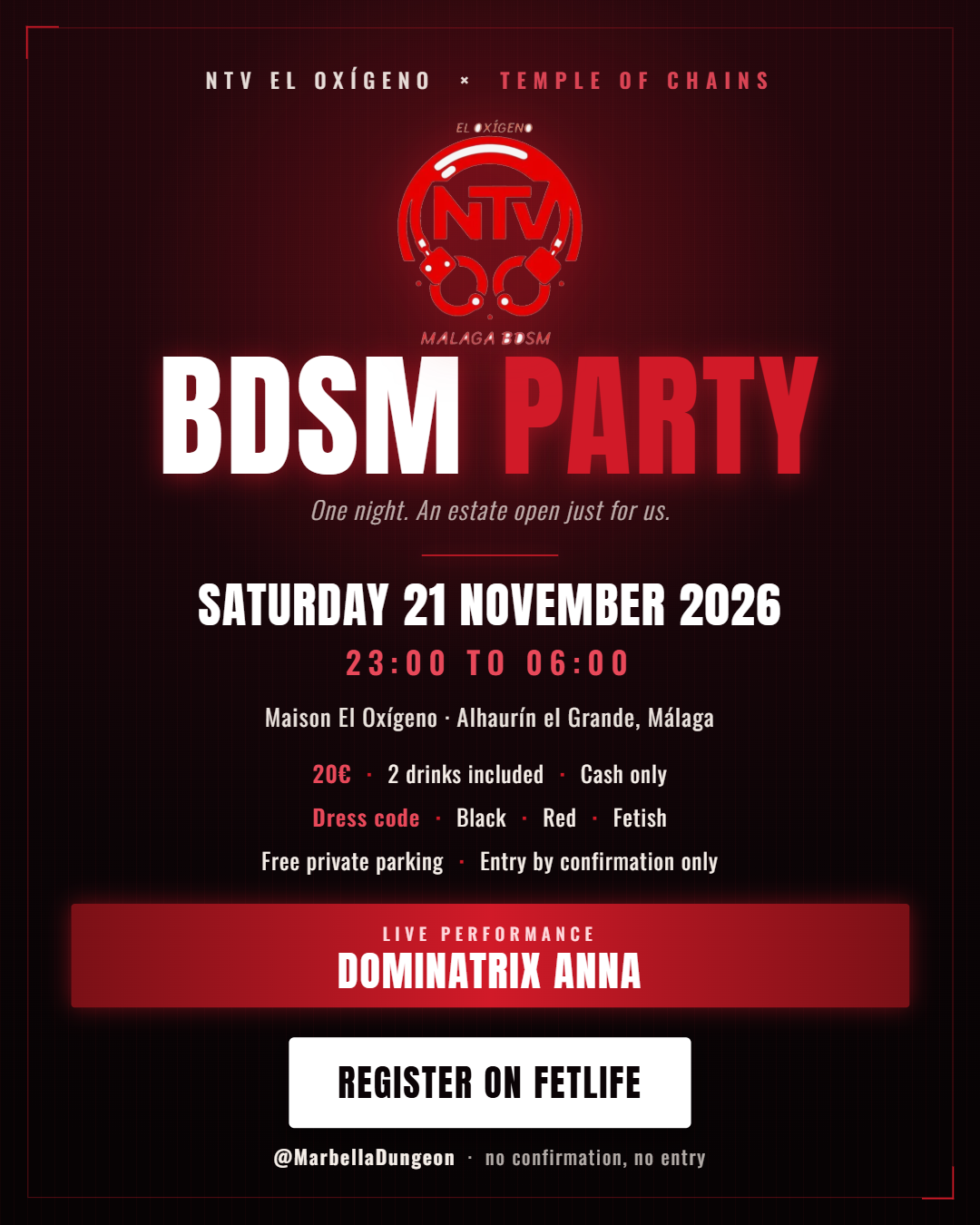
BDSM Party in Málaga: NTV El Oxígeno x Temple of Chains (Nov 2026)