Light Bondage
◆ Beginner · Bondage ◆
Light Bondage
Light bondage introduces restraint play through accessible techniques that prioritize comfort, safety, and consent. This beginner-friendly approach to BDSM bondage creates opportunities for power exchange without requiring specialized equipment or advanced skills.
What light bondage means
Light bondage refers to restraint practices within BDSM that use simple, easily reversible techniques to restrict a partner's movement. Unlike advanced bondage forms, light bondage typically employs soft materials such as silk scarves, purpose-made restraints with quick-release mechanisms, or gentle hand-holding. The emphasis remains on psychological surrender and trust rather than complex rope work or elaborate restriction. This approach makes light bondage particularly suitable for those new to kink or exploring power dynamics for the first time.
The defining characteristic of light bondage lies in its accessibility and safety margin. Restraints remain loose enough to allow circulation, can be removed quickly if needed, and rarely involve suspension or intricate techniques. Many practitioners use light bondage as an entry point to explore dominance and submission dynamics, testing their responses to restraint before progressing to more intensive forms. The practice maintains the essential elements of bondage play whilst minimizing physical risk and technical complexity.
Within BDSM communities, light bondage serves multiple purposes beyond simple restraint. It creates opportunities for sensory focus, vulnerability exploration, and trust building between partners. The submissive experiences a taste of surrender whilst retaining significant physical agency. The dominant develops skills in reading body language, maintaining consent awareness, and creating psychological impact through minimal physical restriction. This foundation proves invaluable for those who later explore more advanced bondage techniques.
How light bondage is practiced
Light bondage practice centers on simple restraint methods that balance psychological impact with physical safety. Partners typically begin with clear negotiation about boundaries, desired sensations, and safewords before any restraint occurs. The dominant then applies chosen restraints whilst monitoring the submissive's comfort and circulation throughout the scene.
- Wrist restraints: Soft cuffs or scarves secure wrists to bedposts or together, creating gentle restriction without pressure points.
- Ankle binding: Light bondage may include ankle restraints that limit leg movement whilst allowing position adjustment for comfort.
- Positional holds: Verbal commands to maintain specific positions create mental restraint without physical bonds, emphasizing psychological surrender.
- Sensory combination: Light bondage often pairs with blindfolds or gentle sensation play to deepen the submissive's focus and vulnerability.
- Time-limited scenes: Beginners typically practice light bondage in shorter sessions, gradually extending duration as comfort and trust develop.
Successful light bondage practice requires ongoing communication throughout the scene. Partners check in verbally, watch for non-verbal cues, and remain prepared to adjust or release restraints immediately. This attentiveness builds confidence and deepens the dynamic between participants.
Safety and consent considerations
Light bondage demands clear consent negotiation before any restraint begins. Partners discuss specific acts they wish to explore, establish safewords, and agree on check-in protocols. The dominant must never leave a restrained partner unattended, even briefly, as circumstances can change rapidly. Regular circulation checks prevent numbness or nerve compression, particularly around wrists and ankles. Both participants should understand how to release restraints quickly in case of emergency, discomfort, or emotional distress.
Physical safety in light bondage extends beyond the restraints themselves. The submissive should avoid eating heavily before scenes to prevent nausea, and both partners benefit from having water nearby. Restraint positions must allow comfortable breathing and avoid joint strain. The dominant watches for colour changes in extremities, listens for changes in breathing patterns, and responds immediately to any signs of distress. Aftercare following light bondage helps both partners process the experience and maintain emotional connection.
Further reading
◆ Go deeper
Connection and Control: The Psychology of Bondage
Explore the psychological foundations of bondage practice, from light restraint to advanced techniques. This course examines trust dynamics, vulnerability, and the mental aspects that make bondage meaningful for both dominants and submissives in BDSM relationships.
Frequently asked questions
What materials work best for light bondage as a beginner?
Soft fabric restraints with velcro closures, silk scarves, or purpose-made beginner cuffs offer the safest options for light bondage. These materials avoid rope burns, release quickly, and won't tighten accidentally. Avoid neckties or anything that creates knots requiring tools to remove during your initial explorations.
How long should light bondage scenes last for beginners?
Initial light bondage scenes typically last ten to twenty minutes, allowing partners to build comfort and assess responses. As experience grows, duration may extend to thirty or forty minutes. Always prioritize quality of connection over scene length, and end before fatigue or discomfort diminish the experience for either partner.
Can light bondage cause injury even with soft restraints?
Yes, even light bondage carries risk if circulation becomes restricted or joints remain in awkward positions. Nerve compression can occur within minutes if restraints press on sensitive areas. Regular checks, proper positioning, and immediate response to numbness or tingling prevent most injuries. Never ignore warning signs during play.
What is the difference between light bondage and other bondage styles?
Light bondage uses simple, easily reversible restraints without complex rope work, suspension, or extreme restriction. Other bondage forms may involve intricate ties, weight-bearing positions, or complete immobilization. Light bondage prioritizes accessibility and safety margins, making it ideal for beginners exploring restraint within their BDSM practice before advancing to specialized techniques.
Ready to turn understanding into practice?
Our self-paced course BDSM Fundamentals: Introduction to BDSM Practices takes you from curiosity to confident, safe practice — with lifetime access.
Enrol Now · €99
You may also like

Fiesta BDSM en Málaga: NTV El Oxígeno x Temple of Chains (nov. 2026)
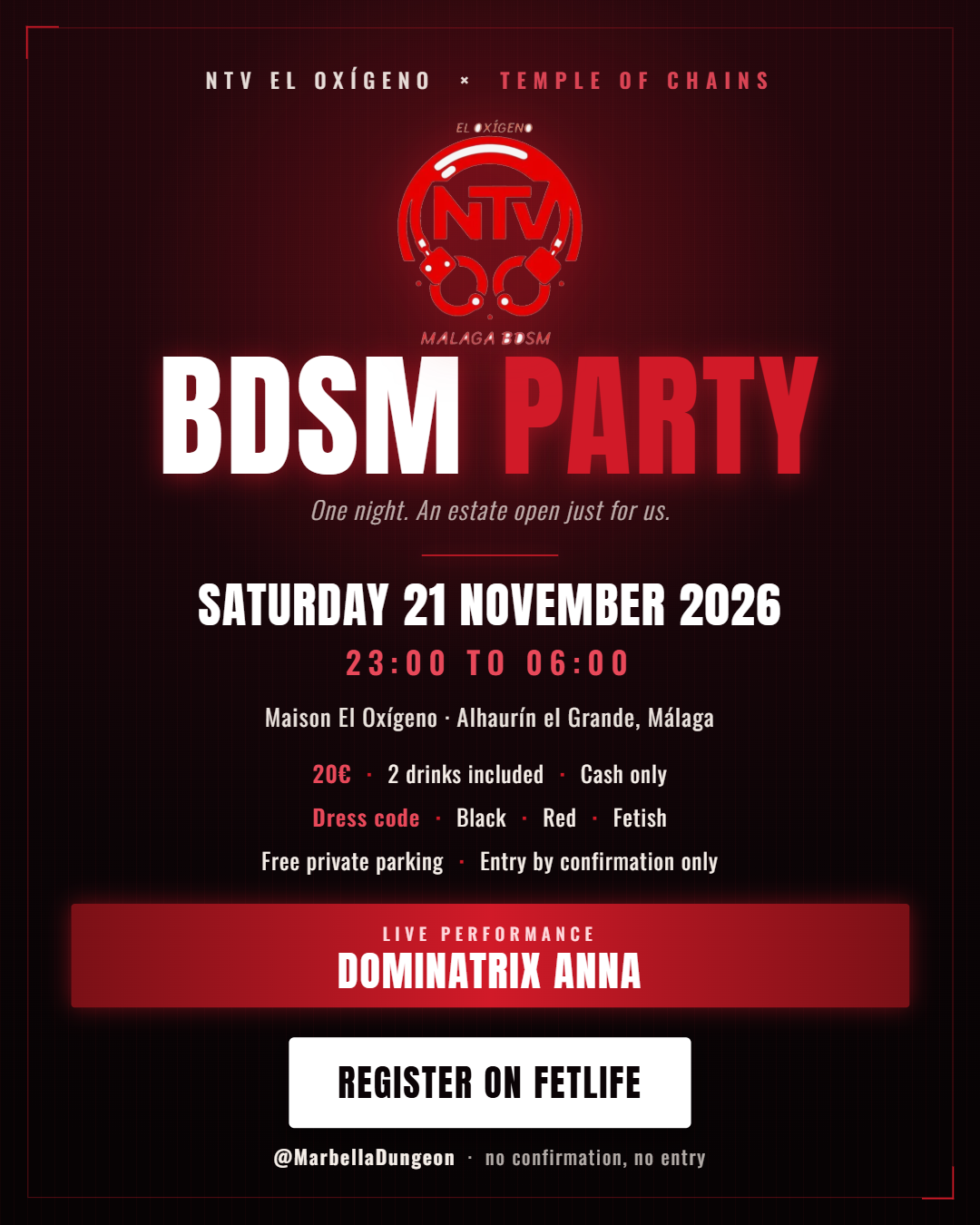
BDSM Party in Málaga: NTV El Oxígeno x Temple of Chains (Nov 2026)