
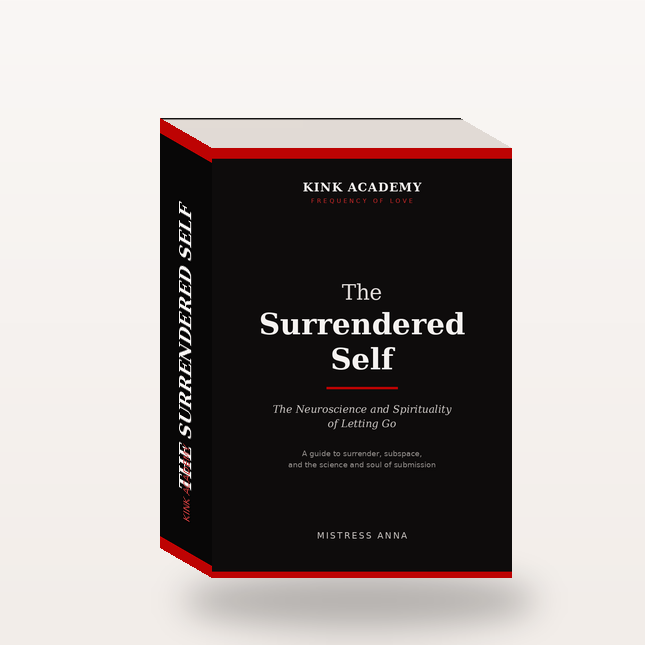
Surrender is not weakness. It is one of the most demanding things a human being can choose to do.
The Surrendered Self is a premium guide to the heart of submission: the moment of letting go, and everything the body, brain, and spirit do in response. It reads surrender through two languages at once. One is the language of neuroscience, the vagus nerve, the nervous system, the chemistry of subspace and drop. The other is the older language of trust, devotion, stillness, and release. Both describe the same experience. Together they let you understand it, and work with it, instead of just hoping it happens.
This is not a glossary of terms you can find scattered across blog posts. It is a single, careful piece written to be read slowly, by the person who guides and the person who surrenders alike.
Inside the guide
- The two maps of surrender, and why most people only ever read one of them
- Why surrender is not collapse, and how to tell the difference in real time
- The nervous system of letting go: the reticular activating system, the vagus nerve, the default mode network
- The anatomy of subspace, and the two doors into it (stillness and overload)
- The container: how trust is actually built, not assumed
- Working with surrender, written in two halves, one for the one who guides and one for the one who surrenders
- Drop, integration, and aftercare, explained as chemistry rather than mood
- The shadow and the sacred: what surrender can heal, and where its edges are
Your tools
The guide closes with three things you can use straight away: a pre-scene negotiation template, a traffic-light safeword card, and an aftercare checklist.
Format: 14-page PDF, delivered instantly after checkout. For personal use.
This guide is educational and supportive. It is not a substitute for medical, psychological, or emergency care. Always prioritise safety, consent, and your own wellbeing.

Reviews
There are no reviews yet.