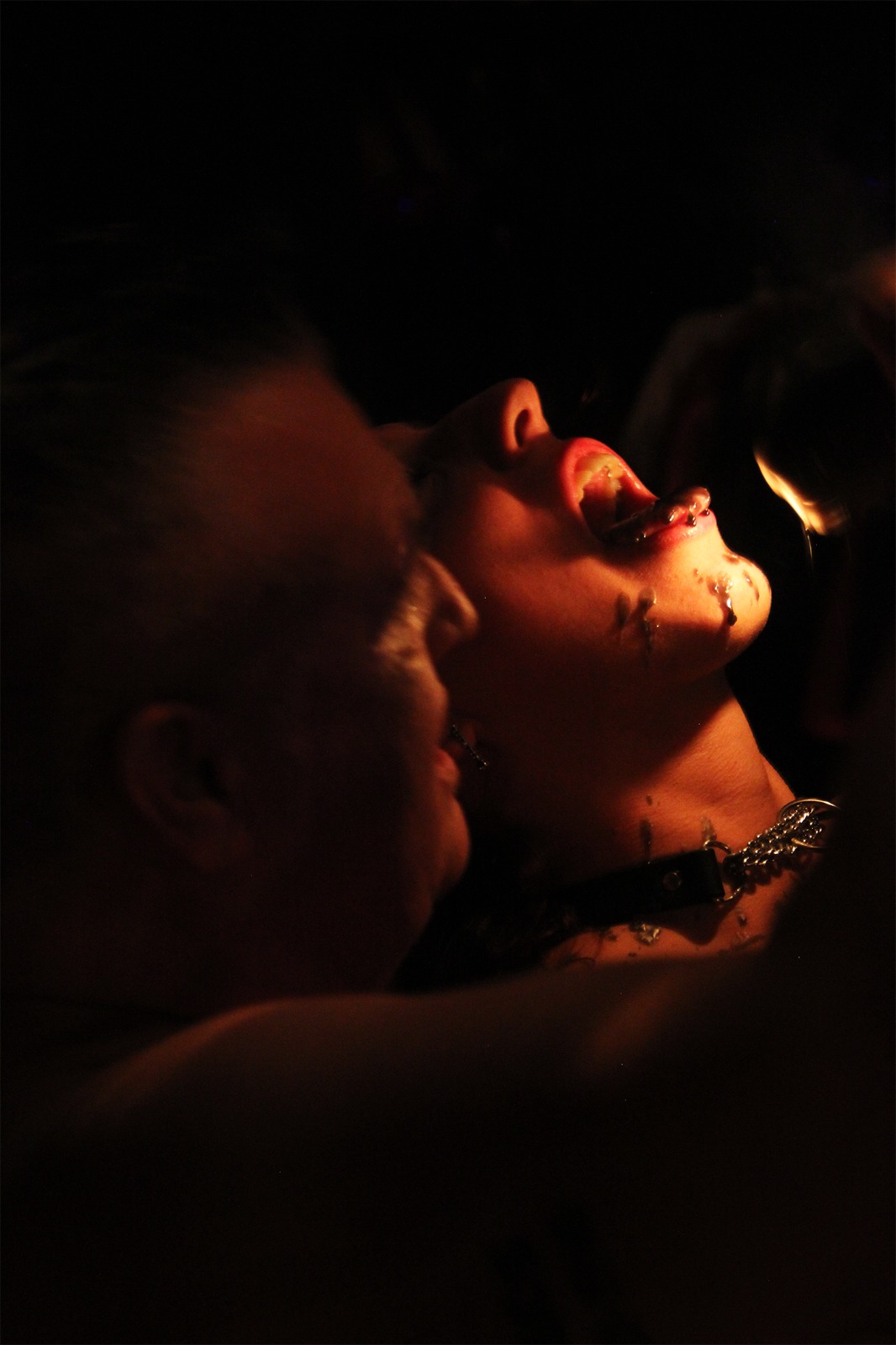
Hair Bondage
◆ Intermediate · Bondage ◆
Hair Bondage
Hair bondage is a BDSM practice that uses hair as a point of control, restraint, or sensory manipulation within consensual scenes. This technique combines physical restriction with psychological power exchange.
What hair bondage means
Hair bondage refers to the deliberate use of hair as an anchor point for restraint, control, or sensation play within BDSM dynamics. The practice ranges from simple hair-holding during scenes to more complex configurations where hair is secured to fixed points or incorporated into broader bondage arrangements. Hair bondage creates both physical restriction and heightened vulnerability through the intimate nature of hair manipulation.
This form of restraint works particularly well for partners with longer hair, though variations exist for different hair lengths and types. The dominant partner may grasp, wrap, or secure the submissive's hair to direct movement, maintain positioning, or create predicament scenarios. Hair bondage often intensifies power exchange by establishing control over a deeply personal aspect of the submissive's body.
Within kink communities, hair bondage occupies a unique position between functional bondage and sensory play. The technique provides genuine physical restraint whilst simultaneously engaging psychological elements of submission and exposure. Many practitioners appreciate hair bondage for its accessibility, requiring minimal equipment whilst delivering significant impact within consensual scenes.
How hair bondage is practiced
Effective hair bondage requires careful technique selection based on hair type, length, and the desired intensity of the scene. Partners should negotiate specific approaches beforehand, considering both physical comfort and psychological boundaries within their dynamic.
- Basic hair grasping: The top gathers hair close to the scalp, maintaining firm but controlled grip to direct movement without excessive pulling.
- Hair wrapping: Hair is wound around the dominant's hand or wrist, creating sustained tension and allowing precise control over positioning.
- Fixed-point attachment: Hair is secured to furniture, bondage frames, or other anchor points using appropriate fasteners that distribute tension safely.
- Combination restraint: Hair bondage integrates with other restraint methods, such as securing hair whilst the submissive is otherwise bound.
- Predicament applications: Hair is positioned to create challenging scenarios where movement in one direction increases tension on the hair.
Regardless of the specific technique employed, hair bondage demands constant awareness of tension levels and the submissive's comfort. Regular check-ins ensure the practice remains within negotiated boundaries throughout the scene.
Safety and consent considerations
Hair bondage carries specific risks that require careful management. Excessive pulling can cause scalp pain, headaches, or in extreme cases, traction alopecia where hair follicles are damaged. The dominant must monitor tension continuously, gathering hair close to the scalp rather than pulling from the ends, which concentrates force and increases injury risk. Partners should establish clear signals for when tension becomes uncomfortable, as the submissive's ability to communicate may be compromised in certain positions.
Consent negotiation for hair bondage should address intensity levels, duration limits, and specific areas of the scalp that may be sensitive. Some individuals have medical conditions, previous injuries, or hair treatments that make hair bondage inadvisable. Partners must discuss these factors during pre-scene planning and respect any limits around hair manipulation. Aftercare following hair bondage scenes should include gentle scalp massage and checking for soreness or tension headaches.
Further reading
◆ Go deeper
Connection and Control: The Psychology of Bondage
Explore the psychological dimensions of restraint practices including hair bondage. Learn how physical control creates deeper connection, heightened vulnerability, and transformative power exchange within consensual BDSM dynamics.
Frequently asked questions
Can hair bondage be practiced with short hair?
Hair bondage works best with longer hair that provides sufficient length for gripping or securing. Partners with shorter hair may explore alternative control points such as collars or head harnesses that create similar psychological effects without relying on hair length.
How do you prevent hair damage during hair bondage scenes?
Prevent damage by grasping hair close to the scalp, avoiding excessive tension, limiting session duration, and never yanking or jerking suddenly. Use hair-safe fasteners if securing to fixed points, and avoid techniques that twist or knot hair tightly.
What are appropriate safewords for hair bondage?
Standard safeword systems work well for hair bondage. Partners should establish clear signals before the scene begins, including verbal safewords and non-verbal alternatives if the submissive's position or gag limits speech. Regular check-ins help maintain safety throughout.
How does hair bondage differ from other restraint methods?
Hair bondage offers unique intimacy through its personal nature whilst requiring less equipment than rope or cuff-based restraint. The technique provides immediate control and psychological impact but demands greater attention to tension management and typically suits shorter duration scenes than other bondage forms.
Ready to turn understanding into practice?
Our self-paced course BDSM Fundamentals: Introduction to BDSM Practices takes you from curiosity to confident, safe practice — with lifetime access.
Enrol Now · €99
You may also like

Fiesta BDSM en Málaga: NTV El Oxígeno x Temple of Chains (nov. 2026)
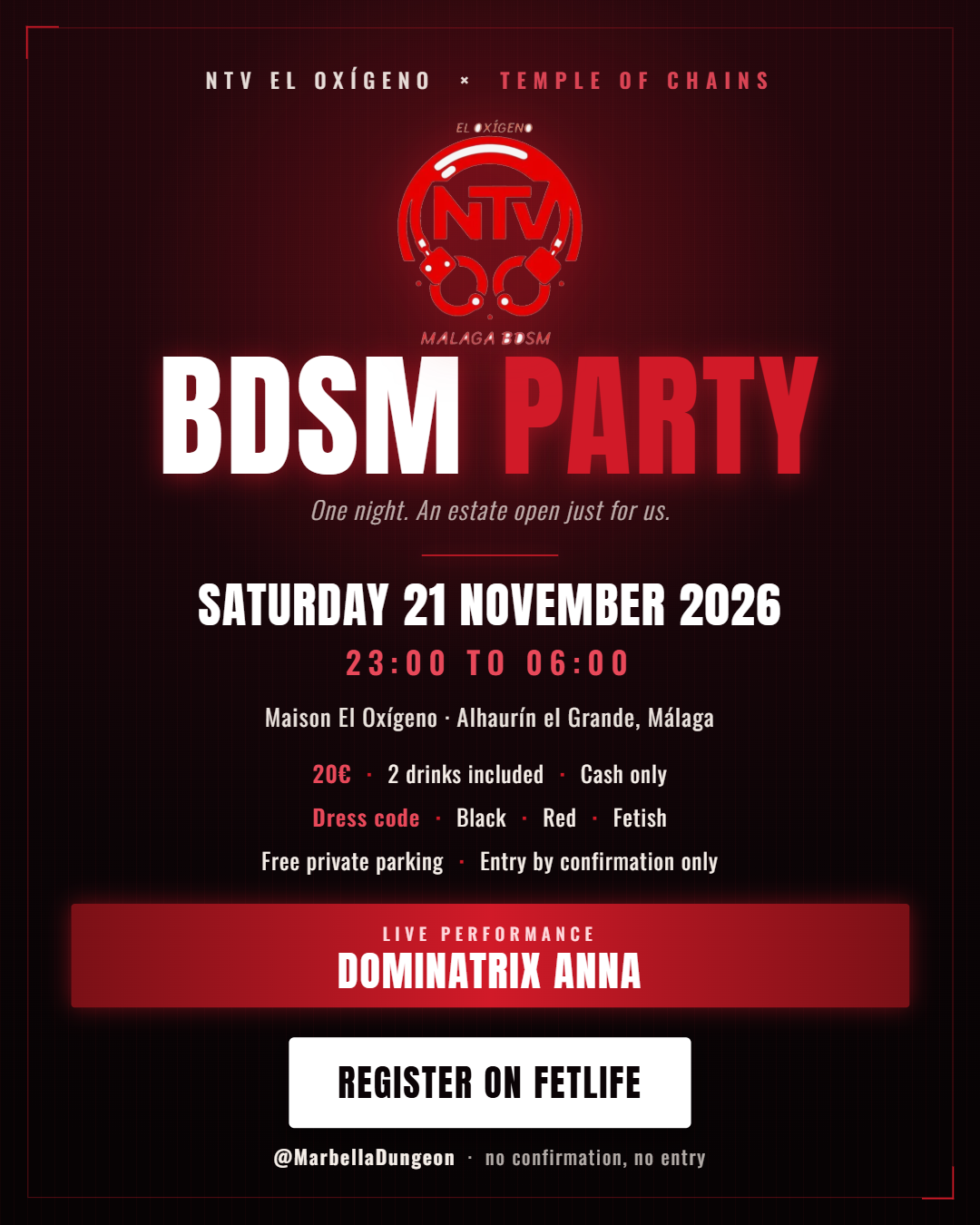
BDSM Party in Málaga: NTV El Oxígeno x Temple of Chains (Nov 2026)